
The Future of Data, Innovation, and Digital Civil Rights


From a very young age, I’ve been fascinated by technology. The idea that one person could communicate with another person on the opposite side of the world in the blink of an eye felt almost magical to me. That sense of wonder first took shape in elementary school, when our teacher brought us to the media center to introduce us to a brand-new concept called “the Internet.”
We gathered around a computer monitor displaying a black screen filled with glowing green text—something reminiscent of the Apple II computers we used to play Oregon Trail on in the computer lab. The librarian explained that we were about to communicate, in real time, with another group of people in Seattle. She typed: “Hello from the students of Mt. Bethel Elementary School.” Moments later, a reply appeared instantly on the screen. I was stunned. That single moment changed everything. I knew then that this was my future.
Today, I’ve spent more than 20 years working in the web hosting industry. During that time, I’ve had the opportunity to witness—and participate in—the growth and evolution of the internet itself. I’ve seen firsthand how technology can connect people, strengthen communities, and create enormous value for society. I’ve also seen the darker side: how the same tools can be used to exploit individuals and violate civil rights.
As I discussed in my previous post, “Purpose Driven Innovation,” technology is neither good nor evil—it is simply a tool. Much like money, its impact depends entirely on the intentions of those who control it. The outcomes of technological advancement are determined not by the tools themselves, but by how they are used.
Technology is now advancing at a pace faster than even Moore could have predicted. New innovations are emerging that will unlock industries that don’t yet exist and create jobs that were unimaginable just a year ago. These advancements are poised to drive dramatic social progress and fuel unprecedented growth in both local and global economies. Yet many people remain unaware of the opportunities—and risks—that accompany this rapid evolution.
At the center of this transformation is data.
Data and storage now play a critical role in shaping the direction of innovation. The more data we can responsibly collect and analyze, the better we can identify patterns, solve problems, and create new technologies that benefit society. However, while data collection offers tremendous advantages, it also comes with serious tradeoffs.
For many people, terms like “data” and “cloud” are vague technical jargon. In reality, data is simply information stored in a structured format at a specific location. That location could be your personal computer or a remote server operated by a company—what we commonly refer to as “the cloud.”
Your local computer stores data about the websites you visit, your emails, documents, and downloaded files. In much the same way, web servers—the backbone of the internet—store enormous amounts of data as well.
As technology has evolved, so too have the types of data being collected and stored on cloud-based servers. What once consisted primarily of websites, photos, and emails now includes bank transactions, medical records, communication transcripts, streaming activity, and GPS location data. This expansion introduces both powerful opportunities and serious ethical concerns.
The impact of collecting this data depends entirely on who controls it—and how it is used. Some data collection can dramatically improve lives, while other uses can be deeply intrusive and undermine civil liberties. These questions are rarely black and white and must be evaluated on a case-by-case basis. This is why I believe democracy itself must evolve—so citizens and users have a direct say in how their data is used.
Consider medical data. By analyzing patient records, we can detect disease outbreaks earlier, identify trends, and accelerate the discovery of new treatments. This data-driven approach is how we will cure cancer and other terminal illnesses in the near future. President Barack Obama’s decision to push for the digitization of medical records was a pivotal moment—one that may ultimately save countless lives and reshape healthcare forever.
Now consider business data. Every time you log into a website or use an online service, companies collect extensive information about how you interact with their product. This data is stored on private servers, outside of your control. While some of this data is used to improve services and innovate, it is also frequently leveraged to increase revenue. This is where ethical concerns arise.
In the past, data collection posed little threat because the information gathered had minimal impact on users’ personal lives. Today, technology is far more personal, and the data being collected is far more revealing. As a result, users can unknowingly be subjected to civil rights violations without realizing it.
This issue is only intensifying with the rise of the Internet of Things. Devices are now connected directly to company servers without the need for a traditional computer. Products like Amazon Dash buttons are a simple example: press a button, and an item is automatically ordered. While no one may care how often you buy laundry detergent, future devices will generate far more sensitive information.
Eventually, nearly every device in your home will be connected to the internet. The data generated by these devices will be stored in corporate cloud environments and used at the discretion of the service provider. Depending on a company’s ethics, that data may be sold, shared, or exploited without meaningful user consent.
The problem is compounded by how terms of service agreements are handled. These documents are long, complex, and intentionally difficult to understand. Nearly everyone is forced to agree to them without reading, effectively signing away rights they don’t fully comprehend. Often, these agreements include clauses that allow companies to share user data with third parties or absolve themselves of responsibility in the event of data breaches.
I don’t believe most companies are intentionally deceptive. Rather, this issue is often ignored because it doesn’t directly impact profits. Users are told that if they don’t like the terms, they can simply stop using the service—but in a world of interconnected devices and platforms, that’s no longer a realistic choice.
We need proactive solutions.
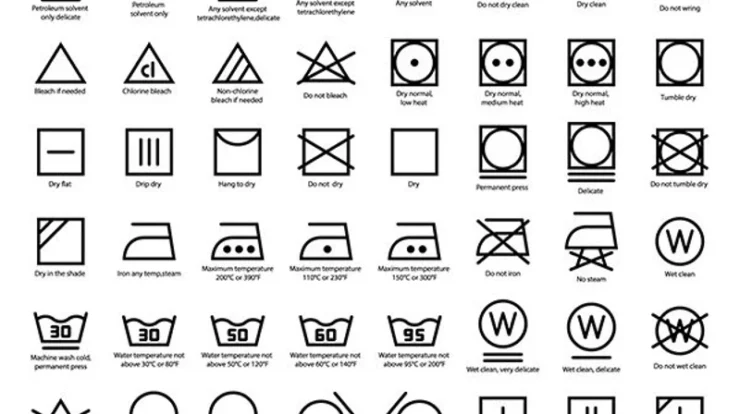
One approach is to radically improve how terms of service are communicated. Agreements could be standardized and represented with simple icons—much like clothing care labels. Another option is short, clear videos that visually explain key terms, similar to airline safety briefings.
However, I believe the more powerful solution lies in giving users true authority over their data. This requires rethinking business models to incorporate digital democracy. If users had ownership stakes and voting rights within the platforms they use, they could directly influence how their data is stored, shared, and protected.
Digitizing democracy within business structures allows ideas to be tested rapidly, solutions to be shared, and trust to be rebuilt. Transparency and direct participation lead to more satisfied users and longer-lasting relationships between companies and customers.
When users have a voice, many of today’s data-related conflicts disappear. Trust increases—not just in companies, but in institutions as a whole. This is especially critical given the trajectory of emerging technologies and the lessons history has already taught us.
Data is one of the most important resources of our time. If we engage in thoughtful, mature conversations now, we can minimize the negative consequences of innovation while maximizing its benefits. As a final note, for anyone involved in investing: data storage and cloud infrastructure will only grow in importance. Likewise, education systems should evolve to create new degree programs focused on data science—preparing the next generation for the world that is rapidly unfolding.




Responses