
Johns Hopkins University: A Global Leader in Medicine, Research, and Clinical Excellence

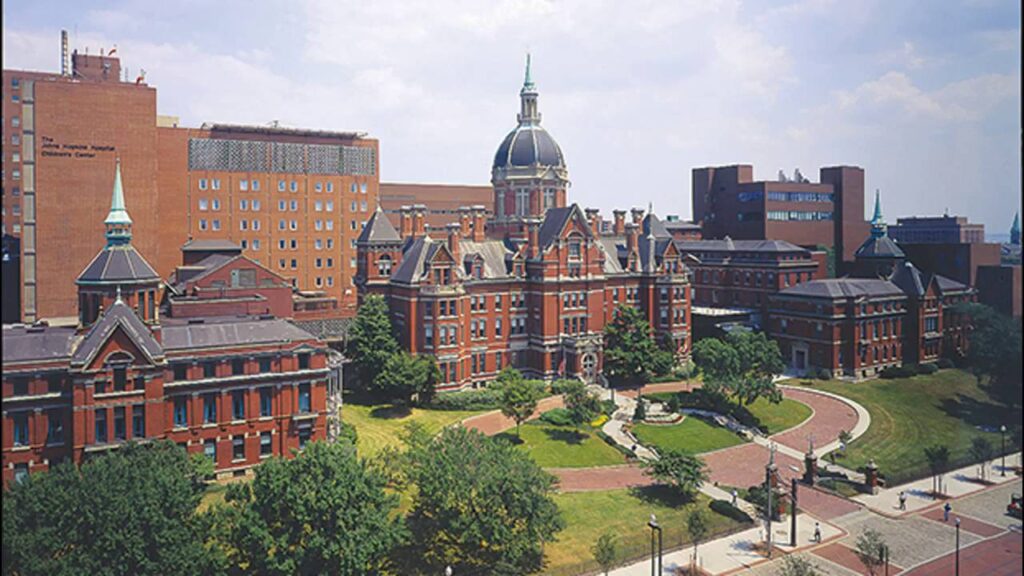
When it comes to the pursuit of medical knowledge, life-saving discoveries, and world-class physician training, Johns Hopkins University (JHU) stands at the very pinnacle of global higher education. For over a century, this institution has consistently pushed the boundaries of what’s possible in medicine, seamlessly weaving together rigorous research, innovative clinical practice, and transformative education. In every corner of its richly interdisciplinary ecosystem — from basic science labs to hospital wards — Johns Hopkins has cultivated an environment that empowers students, physicians, and scientists to improve human health on a global scale.
A Legacy of Innovation: America’s First Research University
Johns Hopkins was founded in 1876 with a revolutionary idea: to prioritize research and discovery alongside teaching. Long before research became a hallmark of elite institutions, Johns Hopkins embraced it as central to higher learning. This founding principle made the university the first research-oriented academic institution in the United States. Johns Hopkins University
That commitment has only deepened over the decades. Today, Johns Hopkins consistently ranks among the top universities in the world for federal research funding and academic impact. It holds the distinction of spending almost $3.1 billion annually on research, more than any other U.S. university for over 40 consecutive years — a testament to its enduring centrality in scientific discovery.
In practical terms, that staggering investment in research fuels breakthroughs across medicine, public health, biomedical engineering, genetics, and more — breakthroughs that translate directly into better diagnostics, therapies, and outcomes for patients around the world.
Record-Breaking Research Funding and Output
At the heart of Johns Hopkins’ research dominance is its medical enterprise — especially the Johns Hopkins School of Medicine. As one of the most highly funded medical research institutions in the United States, it receives an extraordinary volume of research dollars from the National Institutes of Health (NIH)
In fact, for decades, Johns Hopkins University has led all U.S. institutions in NIH funding, receiving more in federal research grants than any other university — a feat matched by few elsewhere. This level of investment reflects the scale and quality of research taking place across the campus, from fundamental science to clinical trials and translational medicine.
But funding is just one metric. Johns Hopkins researchers also produce tens of thousands of high-impact scholarly publications, contribute to groundbreaking clinical trials, and are frequently cited by peers around the world — another sign of their intellectual influence.
These metrics matter because research funding and scholarly output are more than numbers — they represent new knowledge, better treatments, and expanded understanding of human health. For students and trainees, being embedded in such a vibrant research ecosystem means access to real scientific inquiry from day one.
A World-Renowned School of Medicine
While Johns Hopkins’ research achievements are extraordinary on their own, they are deeply integrated with the university’s mission to train future doctors and health leaders.
The Johns Hopkins School of Medicine is widely recognized as one of the top medical schools in the United States and throughout the world. It consistently ranks among the highest in national surveys assessing research quality, clinical training, and academic reputation. Johns Hopkins Anesthesiology
Several specialty areas within the medical school regularly earn #1 or top-five rankings, including internal medicine, radiology, surgery, anesthesiology, psychiatry, and pediatrics. Johns Hopkins Anesthesiology Such rankings reflect not only the strength of faculty and programs but also the breadth of clinical and scientific expertise being brought to bear on the most complex challenges in human health.
Johns Hopkins’ culture of excellence attracts leading physicians and scientists — including Nobel laureates, members of national academies, and innovators whose work changes the paradigms of medicine. Students learn not from textbooks alone, but from tireless practitioners who have shaped modern medicine itself.
Integrated Research and Education
What makes Johns Hopkins truly exceptional is how medicine, research, and training are intertwined. In many medical schools, research and clinical education operate in parallel; at JHU, they intersect, elevating each part of the academic experience.
The School of Medicine encourages students to engage deeply in research as part of their training. For instance:
- Most medical students participate in mentored research projects alongside leading faculty researchers. Johns Hopkins Medicine
- The curriculum includes structured opportunities to pursue scholarly concentrations in basic, clinical, translational, or public health research topics.
- Nearly all students publish research or engage in long-term investigation during their medical training — many producing multiple manuscripts.
These experiences do more than build résumés; they help future physicians develop the analytical skills to ask better questions, interpret complex medical data, and contribute original knowledge to their fields.
This strong emphasis on research ensures that graduates don’t just practice medicine; they advance it.
Unparalleled Clinical Exposure
The clinical component of medical training at Johns Hopkins is another cornerstone of its excellence. From the very beginning of their education, medical students are exposed to real patient care environments where they work alongside experienced clinicians, residents, and fellows.
Unlike traditional models where students may spend their early years isolated from the clinical world, JHU integrates clinical exposure from year one, exposing students to patient care, diagnostics, and interdisciplinary teams early and often.
The university’s flagship affiliate, The Johns Hopkins Hospital, is one of the nation’s most respected medical centers. Known for excellence in trauma care, specialized surgery, complex disease management, and cutting-edge treatment modalities, the hospital serves as both a learning environment and a research hub, giving students hands-on experience with diverse patient populations and medical challenges.
Beyond core rotations, students can elect to participate in clinical research, global health electives, community outreach programs, and interdisciplinary projects that bridge engineering, public health, and clinical medicine.
Innovative Programs and Cross-Disciplinary Opportunities
Johns Hopkins doesn’t confine students to narrow silos. One of its strengths is interdisciplinary collaboration — especially at the intersection of medicine, bioengineering, public health, data science, and more.
Take, for example, the Center for Bioengineering Innovation & Design (CBID). Graduate students here participate in clinical rotations in one of the world’s premier hospital systems, working directly with clinicians, surgeons, engineers, and health technology professionals. Johns Hopkins Bioengineering
These experiences are not peripheral; they are core to the training model, preparing students to think creatively about unmet clinical needs and design solutions with real impact.
Similarly, the Biomedical Engineering program — consistently ranked #1 in the nation — bridges engineering fundamentals with clinical problems, giving students opportunities to conduct research that directly informs patient care and technology advancements.
This interconnected network of schools and disciplines fosters an educational environment where doctors, scientists, engineers, and public health practitioners collaborate on shared goals — often leading to new technologies, therapies, and health delivery models.
A Culture of Mentorship and Professional Growth
At Johns Hopkins, mentorship is more than a buzzword — it’s a structured part of student development. Faculty members are deeply invested in guiding students through research, clinical work, and career planning.
Medical students benefit from:
- One-on-one mentoring with leaders in their areas of interest.
- Support for research project development and publication.
- Professional development resources for residency placement and career planning.
Moreover, outcomes data suggest that a significant portion of Johns Hopkins graduates go on to become faculty members themselves — a powerful indicator of the institution’s role in shaping future leaders in medicine and academic research.
Training Physicians Who Change the World
What does all this investment in research, clinical practice, and education amount to? For many, it means becoming a physician who doesn’t just treat patients — but transforms the field of medicine.
Many Johns Hopkins alumni have:
- Led groundbreaking research in cancer, immunology, neurology, and genetics.
- Developed new clinical protocols now used worldwide.
- Founded medical centers, research institutes, and health initiatives around the globe.
Because Johns Hopkins integrates science, medicine, and compassion, it produces physicians who are as adept in the lab as they are at the bedside — and who think deeply about the structural determinants of health and disease.
Conclusion: A Global Standard-Bearer
In an era where medicine is rapidly evolving — shaped by breakthroughs in genomics, AI, data science, and personalized therapies — Johns Hopkins University remains at the leading edge of discovery and education.
It is more than a medical school. It is a place where research is a way of life, where clinical experience begins early and continues relentlessly, and where students are challenged to think beyond conventional boundaries.
For anyone aspiring to become a doctor who impacts the world of medicine — not just participate in it — Johns Hopkins offers a unique and powerful environment. Its unmatched combination of top-tier research funding, interdisciplinary collaboration, clinical excellence, and mentorship opportunities make it not just one of the best — but a defining institution for future leaders in health and science.


Responses