
Which Universities Lead the World in Cancer Research—and the Technologies Powering Their Breakthroughs

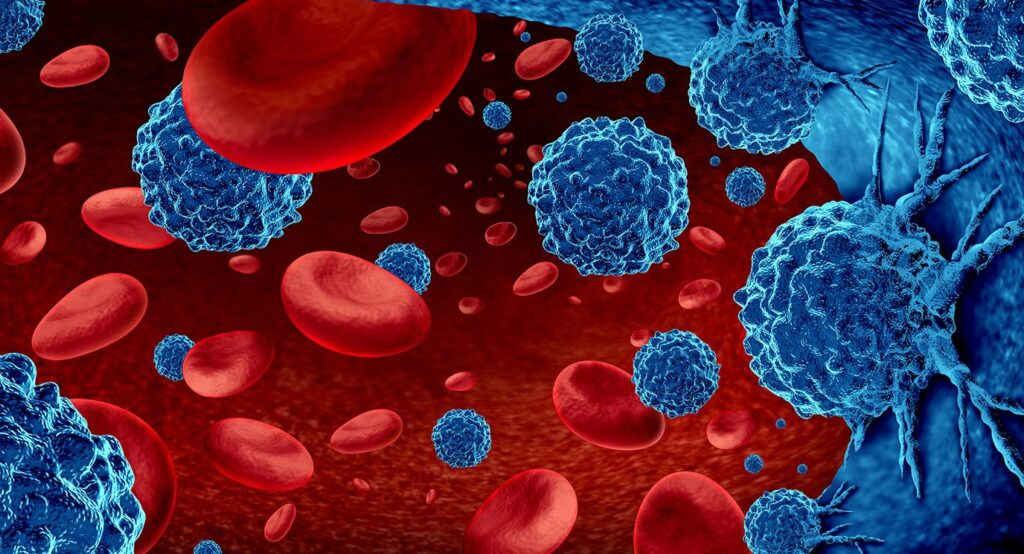
Cancer remains one of the most complex and challenging diseases in human history, yet each year brings new breakthroughs that move us closer to more effective treatments and, ultimately, prevention or eradication. Many of these advances come from world-class research universities and their cutting-edge technologies. These institutions combine interdisciplinary expertise, significant funding, and forward-thinking innovation to push the boundaries of cancer science.
In this blog post, we explore which colleges are leading the world in cancer research and the technologies they’re using to fuel major breakthroughs.
🌍 How We Define Leadership in Cancer Research
Determining which universities lead in cancer research isn’t just about prestige—it’s also about measurable impact. Leading programs are typically:
- Highly ranked in global academic metrics for cancer and oncology research.
- Recipients of significant research funding (often from national institutes or philanthropic sources). UCSF Cancer Center
- Centers of innovation in emerging fields like artificial intelligence, genomics, and immunotherapy.
- Producers of influential scientific publications and clinical trial results.
With these criteria, several institutions rise to the top—not just in the U.S., but globally.
🧬 1. University of California, San Francisco (UCSF)
Why It’s a Leader:
UCSF’s Helen Diller Family Comprehensive Cancer Center consistently ranks among the world’s most impactful cancer research programs, producing influential research, patents, and clinical advances in cancer biology, diagnostics, and therapy. UCSF Cancer Center
It also tops public universities for NIH funding year after year—facilitating a broad research portfolio that spans basic science, translational biology, and clinical implementation. UCSF Cancer Center
Key Technologies Driving Progress:
- Genomic sequencing and precision oncology — tailoring treatments based on individual tumor genetics.
- AI-assisted imaging and diagnostics — enabling earlier and more accurate cancer detection.
- Cellular and immunotherapies — refining CAR-T and other immune-based strategies.
UCSF also collaborates with industry leaders and startups to rapidly translate lab discoveries into real-world tools and therapies. UCSF Cancer Center
🤖 2. Massachusetts Institute of Technology (MIT)
MIT is not only a powerhouse for engineering and technology but also a major contributor to cancer research. Its Koch Institute for Integrative Cancer Research blends biology with engineering to tackle cancer from multiple angles. Wikipedia
Breakthrough Technologies at MIT:
- Nanotechnology for cancer detection and therapy — MIT researchers are developing nanoscale systems that can deliver drugs precisely to tumors and monitor disease progression. Wikipedia
- AI and machine learning platforms — through the MIT Abdul Latif Jameel Clinic, researchers are building tools like Mirai and Sybil to detect cancers earlier using pattern recognition and predictive models. Wikipedia
- Interdisciplinary bioengineering solutions — engineers and biologists work together to prototype new diagnostics and drug delivery systems.
MIT’s unique emphasis on combining computational power with biological insight makes it a global center for transformative technology in cancer research.
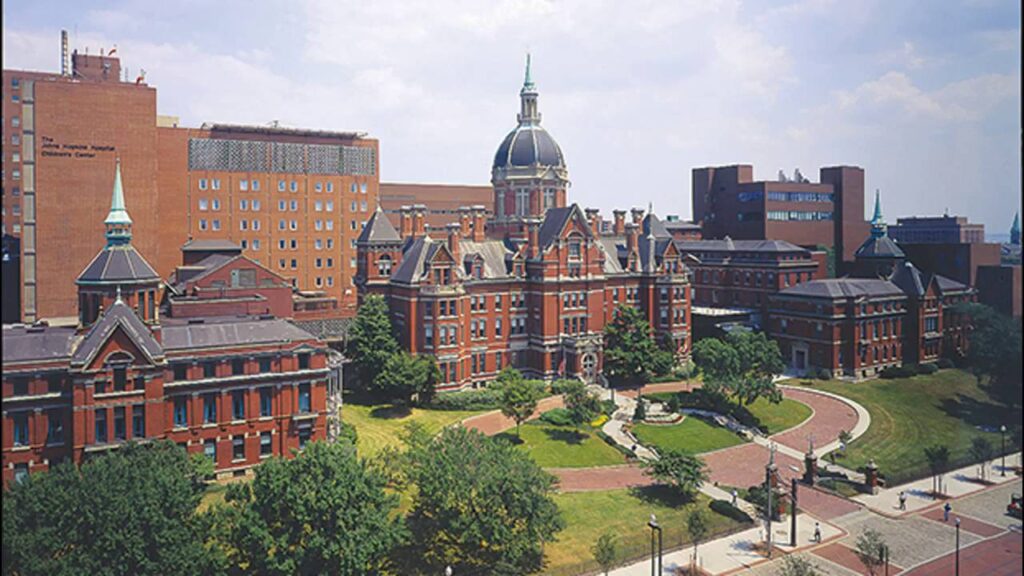
🧠 3. Johns Hopkins University
Johns Hopkins has a long history of pioneering advances in cancer research, from mapping cancer genomes to developing new treatment strategies. Recently, the university has expanded its focus on AI-assisted cancer science through collaborations like the Cancer AI Alliance, which harnesses data science, machine learning, and clinical expertise to improve cancer diagnosis and treatment outcomes. Hopkins Medicine
Key Technological Strengths:
- Precision medicine through genomic and epigenomic research
- AI-driven analytics to interpret complex clinical data
- Engineering solutions for early cancer detection and surgical guidance
Through multidisciplinary centers and collaborations, Johns Hopkins brings together expertise that spans medicine, engineering, data science, and clinical care.
🧪 4. Stanford University
Stanford’s Cancer Institute is another heavyweight in both research and technological innovation. While not always the very top in global rankings, it is known for connecting academic research with Silicon Valley’s tech ecosystem.
Technologies Being Developed at Stanford Include:
- AI and computational biology tools that model cancer behavior
- Stem cell and regenerative medicine approaches
- Bioinformatics for drug discovery and personalized therapies
The proximity to high-tech partners and entrepreneurial culture accelerates Stanford’s ability to pivot discoveries into clinical impact.
🧫 5. Other Global Leaders in Cancer Research
Cancer research is a worldwide endeavor. Several other universities and their affiliated research centers have earned recognition for scientific contributions:
- University College London (UCL) — consistently scores high internationally for cancer research outputs and collaborations.
- Harvard University — closely linked with Dana-Farber Cancer Institute and known for leadership in biomedical research.
- University of Michigan (Rogel Cancer Center) — NIH-designated comprehensive center with a strong research network and broad clinical studies. Wikipedia
- University of Maryland Greenebaum Comprehensive Cancer Center — notable for translational research and community impact. Wikipedia
These institutions not only advance core science but also contribute to international collaborations that expand the reach of cancer research globally.
🚀 Technologies Powering Breakthroughs in Cancer Research
Across these institutions, several key technologies are transforming the fight against cancer:
🔬 Precision Medicine & Genomics
Advanced sequencing technologies allow scientists to define the unique genetic profiles of tumors, leading to targeted therapies tailored to individual patients.
🧠 Artificial Intelligence & Machine Learning
AI helps clinicians interpret massive datasets—from imaging scans to genetic codes—accelerating diagnosis and identifying patterns that inform treatment decisions.
🧬 Immunotherapy & Cellular Engineering
New immune-based therapies, such as engineered T-cells, enable the body’s natural defenses to recognize and destroy cancer more effectively.
🦠 Nanotechnology & Targeted Drug Delivery
Nanoparticles and engineered materials can deliver drugs to specific tumor sites, reducing systemic side effects and improving treatment efficiency.
🖥 Computational Biology & Digital Twins
Simulating cancer progression and treatment response in silico allows researchers to optimize therapies before clinical use.
🧬 How Funding and Infrastructure Shape the Best Cancer Research Departments
One major factor separating top cancer research colleges from others is scale. Institutions like UCSF, MIT, and Johns Hopkins receive hundreds of millions of dollars in research funding each year from sources such as the National Institutes of Health (NIH), the National Cancer Institute (NCI), private foundations, and industry partnerships. This funding allows them to build advanced laboratories, recruit elite scientists, and invest in long-term research projects that may take decades to fully mature.
Large-scale infrastructure matters in cancer research. High-throughput genomic sequencers, clean rooms for cell therapy manufacturing, advanced imaging systems, and supercomputing clusters are expensive to build and maintain. Colleges with strong funding can sustain these environments, enabling continuous experimentation and rapid iteration when new discoveries emerge.
🧪 Translational Research: Turning Discoveries Into Treatments
What truly distinguishes elite cancer research departments is their ability to move discoveries from theory into practice. This process, known as translational research, bridges basic science and patient care.
For example:
- A mutation discovered in a laboratory setting can become a drug target
- A new biomaterial designed by engineers can evolve into a drug delivery system
- AI models trained on research data can later be used in hospitals
Universities with integrated medical schools and teaching hospitals excel in this area because scientists and clinicians work side by side. This structure dramatically shortens the timeline between discovery and real-world impact.
🧠 The Importance of Data Sharing and Open Science
Modern cancer research relies heavily on data sharing. Leading universities participate in global research networks where genomic data, imaging data, and clinical trial results are shared securely with other institutions. This collaborative approach accelerates discovery and avoids duplication of effort.
By pooling anonymized patient data, researchers can:
- Identify rare cancer subtypes
- Understand treatment resistance
- Improve predictive models for therapy outcomes
Colleges that embrace open science principles often make faster progress because breakthroughs are built collectively rather than in isolation.
🌍 Cancer Research as a Global Effort
Although many of the top cancer research colleges are based in the United States, cancer research is global. Leading universities regularly collaborate with institutions in Europe, Asia, and Canada. These international partnerships allow scientists to study diverse populations, which is critical for understanding how genetics, environment, and lifestyle affect cancer development.
Through global collaboration:
- Clinical trials recruit more diverse participants
- Research findings become more broadly applicable
- Therapies can be adapted for different healthcare systems
The best cancer research departments understand that eradication is a worldwide goal, not a local one.
🎓 Education and Workforce Development
Another reason top colleges lead cancer research is their focus on education and training. These institutions are producing the next generation of oncologists, researchers, and biotech entrepreneurs.
Students gain exposure to:
- Real-world clinical trials
- Advanced lab techniques
- AI and computational biology tools
- Ethical and regulatory aspects of cancer research
This educational pipeline ensures that innovation continues long after current researchers retire, sustaining momentum toward long-term cancer eradication goals.
⚖️ Ethical Considerations in Advanced Cancer Technology
As technology advances, ethical questions become increasingly important. Leading cancer research colleges actively study and address concerns related to:
- Genetic privacy
- AI decision-making transparency
- Equity in access to new treatments
- Bias in medical data
Institutions with strong ethics programs help ensure that technological progress benefits all populations, not just those with access to elite healthcare systems.
🔮 The Future of Cancer Research at Top Colleges
Looking ahead, the most advanced cancer research departments are increasingly focused on prevention and prediction, not just treatment. Future directions include:
- Predicting cancer risk decades in advance using genetics and AI
- Designing preventative therapies for high-risk individuals
- Monitoring health continuously through wearable biosensors
- Using AI to simulate cancer evolution before it occurs
These approaches represent a shift from reactive medicine to proactive health management.
🏁 Extended Final Perspective
The question of which college has the best cancer research department ultimately highlights a deeper truth: progress against cancer comes from ecosystems, not single labs. Universities like UCSF, MIT, Johns Hopkins, and UC Davis lead because they combine funding, talent, technology, collaboration, and education into unified research environments.
Rather than competing in isolation, these institutions collectively push humanity closer to understanding, controlling, and eventually eradicating cancer. Their work demonstrates that the future of cancer research lies not in one breakthrough, but in thousands of coordinated advances—powered by technology, guided by science, and driven by a shared global mission.
Final Thoughts
There is no single college that can claim to have the “best” cancer research department in every category. However, institutions like UCSF, MIT, Johns Hopkins, and UC Davis represent the highest level of cancer research in the world.
What makes these colleges exceptional is not just prestige or funding—but their ability to combine technology, collaboration, and innovation to tackle one of humanity’s greatest challenges. Through advances in genomics, immunotherapy, AI, and early detection, these universities are bringing the world closer to a future where cancer is no longer a life-threatening disease, but a manageable—or even preventable—condition.

Responses