
🚀 The Cancer Moonshot: Accelerating the Fight Against Cancer

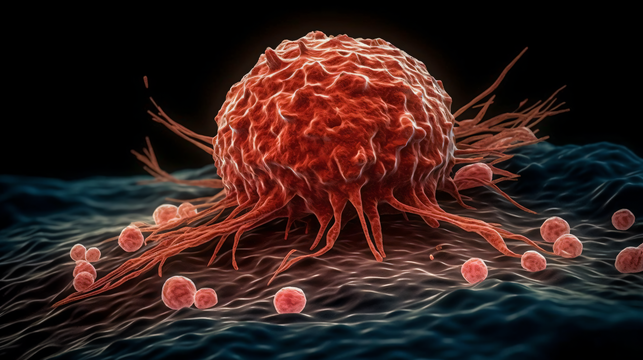
Cancer has long been one of humanity’s greatest medical challenges. Despite decades of research and treatment advances, cancer continues to affect millions of people worldwide. In response, the U.S. government launched the Cancer Moonshot, a bold initiative aimed at accelerating cancer research, improving prevention, and ultimately making more therapies available to patients faster. Today, this effort has become one of the most ambitious collaborative scientific endeavors in modern medicine, involving universities, hospitals, research institutes, and federal agencies across the country.
🧠 What Is the Cancer Moonshot?
The Cancer Moonshot is a nationwide initiative first launched in 2016 with a goal that sounds as audacious as its name: to make a decade’s worth of progress in cancer prevention, diagnosis, and treatment in just five years. The goal was reinvigorated in 2022 under President Biden to build on scientific momentum and strengthen national strategies against cancer. Cancer.gov
The core mission of the Cancer Moonshot is to double the rate of progress in cancer-related scientific discovery, improve patient outcomes, and reduce the burden of cancer on individuals and communities. Its work spans basic biology to clinical applications, emphasizing early detection, prevention, innovative treatments, and equitable access to care and research participation.
To achieve this, the Cancer Moonshot brings together researchers and clinicians across sectors to:
🔬 Accelerate scientific discovery
Support high‑impact research projects that yield new insights into cancer biology and disease progression.
💉 Develop new treatments
Fuel the creation of innovative therapies — including immunotherapies, precision medicine approaches, and biologics — that can be customized for individual patients.
🧪 Improve early detection
Advance technologies to detect cancer earlier, when it is most treatable, and ideally before symptoms appear.
🌍 Reduce disparities
Ensure that progress benefits all communities, including historically underserved populations, through inclusive clinical trials and community‑focused research.
🔗 Expand data sharing
Build networks and platforms that allow scientists to share data more efficiently and collaborate across institutions to accelerate discoveries and avoid duplication. Cancer.gov
🎓 Universities Leading the Charge
A defining feature of the Cancer Moonshot is the collaboration among universities nationwide. These academic institutions are critical hubs for scientific innovation, training future researchers, and translating discoveries from the bench to the bedside.
Here’s a deeper look at some of the universities contributing to the Cancer Moonshot — and what they’re doing:
🧪 Tulane University – Precision Imaging for Cancer Surgery
Tulane University is a major partner in the Cancer Moonshot’s Precision Surgical Interventions program. The university received up to $22.9 million in federal funding from the Advanced Research Projects Agency for Health (ARPA‑H) to develop an advanced imaging system that helps surgeons visualize cancer at the cellular level during surgery.
This innovative technology creates a highly detailed 3D map of tumor tissue in real time. If successful, it could dramatically reduce repeat surgeries and improve surgical outcomes for cancers that are difficult to remove — such as prostate and colorectal tumors. Tulane’s project includes collaborations with the University of Georgia and the University of Utah, along with clinical partners like Cedars‑Sinai Medical Center.
📸 University of Washington (UW) – Next‑Generation Tumor Visualization
The University of Washington in Seattle received about $21.1 million for developing systems that improve real‑time visualization of tumor cells during surgery. This technology aims to allow surgeons to assess whether cancer cells remain after tissue removal — before the operation ends — eliminating the need for an on‑site pathologist.
UW’s work is highly collaborative: alongside Tulane and Rice University, UW engineers and clinicians are creating devices that could function like an intraoperative scanner to image surgical specimens quickly and accurately.
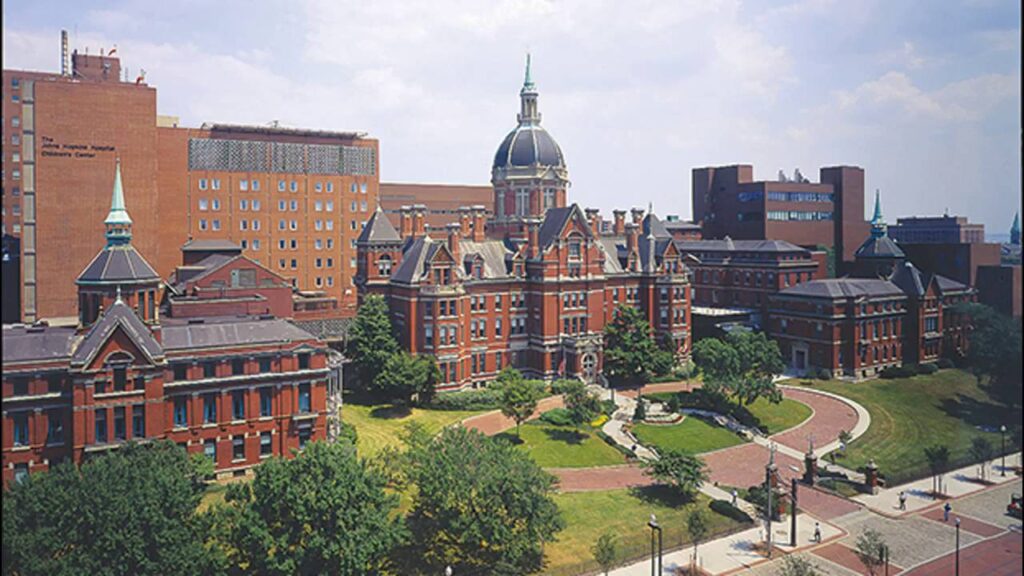
🔬 Johns Hopkins University – High‑Precision Surgical Tools and Imaging
Johns Hopkins University researchers received more than $20 million from ARPA‑H for projects that focus on enhancing surgical precision. One team is developing a non‑contact, photoacoustic endoscope and multi‑cancer fluorescent contrast agents to enable surgeons to distinguish cancer cells from healthy tissue more clearly during operations.
Additional ARPA‑H‑funded efforts at Johns Hopkins include technology to improve robotic cancer surgeries by enabling 3‑D fluorescence imaging of critical structures like nerves and blood vessels in real time. These collaborations involve partners at Dartmouth College and the university’s own Whiting School of Engineering and School of Medicine.
🧬 University of California, San Francisco (UCSF) – Innovative Tools for Detection and Treatment
UCSF is another cornerstone of Moonshot research. With ARPA‑H support, researchers at UCSF are developing new microscopes and imaging tools that can identify microscopic cancer remnants inside patients, helping surgeons remove all malignant tissue before a procedure concludes.
Beyond Moonshot contracts, UCSF is also part of larger collaborative cancer research hubs — for example, a West Coast partnership with Stanford University aimed at advancing cellular therapies and artificial intelligence‑driven precision care.
🧠 Rice University – Smart Therapeutics and Targeted Cancer Technologies
Rice University leads research into innovative therapies, including the Targeted Hybrid Oncotherapeutic Regulation (THOR) project — a bioengineered implant that can sense cancer signals and deliver localized treatment to stimulate the immune system. With funding in the tens of millions, this initiative targets improvements in how solid tumors and difficult‑to‑treat cancers respond to therapy.
Rice is also collaborating with Georgia Tech on developing energy‑efficient control chips and sensor technology that could power next‑generation treatment platforms.
🧬 Georgia Institute of Technology – Early Detection and Biosensing
Georgia Tech is a major recipient of Moonshot‑aligned funding, receiving as much as $119 million in projects designed to push early detection forward. One of its key projects involves building a Cancer and Organ Degradome Atlas (CODA) — a detailed map of cellular cancer biomarkers that could be used to engineer biosensors to recognize multiple types of cancer at their earliest stages.
This multi‑cancer early detection research could dramatically improve outcomes by enabling clinical interventions before tumors grow large or metastasize, making treatments more effective and less invasive.
🩺 University of Illinois Urbana–Champaign – Microscopic Detection Innovations
The University of Illinois Urbana–Champaign received roughly $32.6 million as part of ARPA‑H funding to invent new microscopes and imaging tools that enhance a surgeon’s ability to detect microscopic cancer cells during operations. This research can improve surgical accuracy and help ensure that all cancer cells are removed during a single procedure.
🧫 Dartmouth College – Novel Surgical Visualization Techniques
Dartmouth College is part of several Moonshot‑backed projects that aim to develop cutting‑edge dye‑based and other visualization techniques for use in cancer surgery. These tools help surgeons see critical structures — including blood vessels and nerves — reducing collateral damage and improving recovery.
🧬 Yale School of Medicine, Emory University, and University of Georgia – Immune‑Focused Therapy Development
An interdisciplinary research team including Yale School of Medicine, Emory University, and the University of Georgia received funding for an ARPA‑H supported project titled “Curing the Uncurable via RNA‑Encoded Immunogene Tuning.” This research aims to educate the immune system using mRNA technology — similar to mRNA vaccines — to help immune cells recognize and fight cancer more effectively.
🌍 Why the Cancer Moonshot Matters
The Cancer Moonshot is more than a government program — it’s a national mission with global implications. Its impact ripples across science, medicine, and everyday life.
💡 Faster Scientific Progress
Since its inception, the Cancer Moonshot has supported hundreds of research projects and dozens of consortia focused on collaboration, discovery, and translational science. It has established networks that encourage patients to contribute data, expanded immuno‑oncology efforts, and built robust national data ecosystems for cancer research. Cancer.gov
These collaborative infrastructures make it easier for scientists to pool knowledge, spot patterns in complex disease behavior, and test insights across different populations and types of cancer.
❤️ Equity and Inclusion in Cancer Care
A major goal of the Cancer Moonshot is to reduce disparities in cancer screening, treatment, and outcomes. By diversifying clinical trial participation and focusing on underserved communities, the initiative seeks to ensure that advancements in cancer care help everyone — not just those with access to top‑tier medical centers.
Research supported under the Moonshot now often includes commitments to broaden participation from historically underrepresented populations, an important step toward equitable healthcare and improved survival rates.
🔄 Expanded Data Sharing and Collaboration
The Cancer Moonshot has accelerated the creation of national data platforms, like the NCI Cancer Research Data Commons, which helps researchers and clinicians share findings, integrate clinical and genomic data, and make discoveries more quickly. Cancer.gov
Such large‑scale integration of data accelerates research because scientists can build on each other’s work instead of duplicating efforts, and patterns that aren’t visible in smaller datasets become detectable.
🌟 The Future of Cancer Research
Thanks to the Cancer Moonshot, the landscape of cancer research is changing rapidly. Technologies like artificial intelligence, robotic surgery, and personalized medicine are no longer futuristic concepts but real tools in today’s clinical and research settings. By leveraging these tools, scientists are creating breakthroughs that were once considered decades away.
Universities across the U.S. are crucial drivers of these advances, pairing fundamental science with ambitious goals and partnering across disciplinary and institutional boundaries.
🛠 A Collective Commitment to Ending Cancer
In short, the Cancer Moonshot represents hope, innovation, and a commitment to ending cancer as we know it. With continued support from federal agencies, research institutions, and universities, the initiative is transforming how cancer research is conducted and how new discoveries reach patients.
This nationwide effort — powered by tens of millions of dollars in federal funding, multidisciplinary teams of scientists, and collaborations across universities — is building a future where cancer is more preventable, more treatable, and less deadly.
With continued research, funding, and collaboration, the dream of a world with fewer cancer deaths is becoming a reality.


Responses