
What Does the Future Hold for Artificial Intelligence?


Artificial intelligence is no longer a speculative technology waiting on the horizon. It is already reshaping how societies function, how economies grow, and how humans understand intelligence itself. Yet despite its rapid integration into daily life, the future of artificial intelligence remains one of the most complex and consequential questions of the modern era.
The coming decades will not simply bring “better AI.” They will bring a fundamental shift in how intelligence is created, distributed, governed, and trusted. The future of AI will be defined as much by human choices as by technical breakthroughs.
From Automation to Augmentation
The earliest applications of AI focused on automation — replacing repetitive human tasks with machines that could operate faster and more consistently. While automation will continue, the future lies in augmentation.
AI systems will increasingly function as cognitive extensions of the human mind. Engineers will collaborate with AI copilots to design software. Scientists will explore hypotheses generated by AI models trained on vast research corpora. Lawyers, doctors, and educators will use AI to analyze complex information and surface insights that would otherwise take years to uncover.
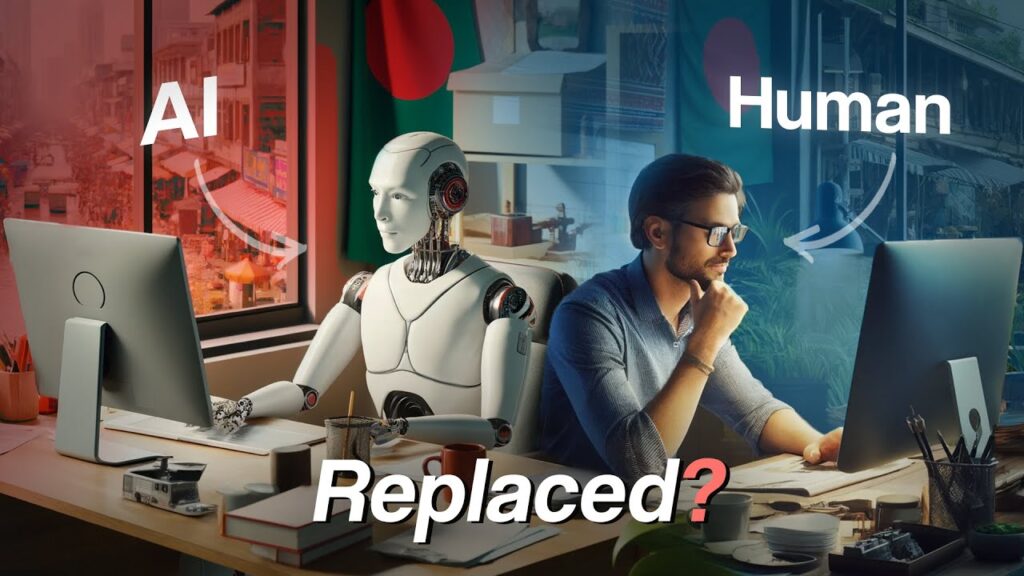
This shift reframes AI not as a replacement for human intelligence, but as a multiplier of human potential.
Hyper-Personalized Intelligence
One of the most transformative forces in AI’s future is personalization at an unprecedented scale. AI systems will move beyond generic responses to deeply individualized experiences.
In education, students will learn through adaptive curricula tailored to their strengths, weaknesses, and interests. AI tutors will provide immediate feedback, identify gaps in understanding, and evolve alongside the learner. This could dismantle traditional barriers to education, offering world-class instruction to anyone with an internet connection.
In healthcare, AI will transition medicine from reactive treatment to proactive prevention. Personalized health models will analyze genetic, behavioral, and environmental data to anticipate disease risk and recommend interventions before symptoms appear.
The Transformation of Work and Value
The future of AI will reshape labor markets in ways that challenge traditional definitions of productivity and value. Routine tasks across industries — from data entry to basic content creation — will increasingly be automated.
However, this does not signal the end of work. Instead, it marks a transition toward work centered on creativity, judgment, emotional intelligence, and ethical responsibility. New roles will emerge in AI governance, system design, interpretability, and alignment.
Organizations will increasingly value individuals who can think critically, ask the right questions, and collaborate effectively with intelligent systems.
Creativity, Authorship, and Cultural Change
AI-generated art, music, writing, and design raise profound questions about creativity and ownership. In the future, creativity will shift from execution to intention.
Humans will define goals, meaning, and narrative, while AI assists with exploration and production. This partnership will lower barriers to creative expression, enabling more people to participate in art and innovation.
Rather than diminishing human creativity, AI will expand it — but society will need new frameworks for authorship, attribution, and intellectual property.
Governance, Ethics, and Trust
As AI systems influence decisions in finance, healthcare, education, and justice, trust becomes essential. The future of AI depends on building systems that are transparent, explainable, and accountable.
Ethical AI design will require multidisciplinary collaboration among engineers, policymakers, educators, and philosophers. Questions of bias, data ownership, surveillance, and consent will shape regulatory frameworks worldwide.
Without responsible governance, AI could reinforce inequality and concentrate power. With thoughtful oversight, it could democratize access to knowledge and opportunity.
Open AI, Decentralization, and Public Good
The future of AI should not be confined to a handful of corporations or governments. Open-source models, academic collaboration, and decentralized infrastructures will play a vital role in ensuring that AI serves the public good.
Universities and research institutions can act as stewards of ethical AI development, producing transparent models and educating future leaders. Open collaboration will accelerate innovation while maintaining accountability.
AI’s greatest promise lies in collective progress — not monopolized intelligence.
Redefining Human Identity
As AI systems grow more capable, humanity will confront deeper philosophical questions. What does it mean to be intelligent in a world where machines can reason, create, and communicate?
The future will require redefining human identity not by cognitive superiority, but by values such as empathy, wisdom, responsibility, and moral judgment. AI challenges humanity to elevate what it means to be human.
Long-Term Horizons: Toward General Intelligence
While today’s AI systems remain narrow and task-specific, researchers continue to explore artificial general intelligence (AGI). If achieved, AGI would represent a fundamental shift in civilization.
The pursuit of AGI demands caution, alignment, and global cooperation. Intelligence without values is not progress — it is risk.
The future of AI should prioritize alignment with human goals, cultural diversity, and long-term sustainability.
Education as the Foundation
Education will determine how successfully society integrates AI. AI literacy — understanding how systems work, their limitations, and their societal impact — must become a core component of modern education.
Students should not only learn how to use AI, but how to question it, evaluate it, and guide it ethically. The future belongs to those who can collaborate intelligently with intelligent systems.
A Shared Responsibility
The future of artificial intelligence is not inevitable. It will be shaped by decisions made today in classrooms, research labs, government offices, and open-source communities.
AI can either deepen existing divides or become one of the greatest tools for human advancement. The difference lies in how intentionally it is developed and deployed.
Conclusion: Choosing the Future of Intelligence
Artificial intelligence is not just a technological evolution — it is a societal one. Its future will reflect humanity’s priorities, ethics, and imagination.
The question is not whether AI will shape the future, but whether humans will shape AI wisely.
The future of artificial intelligence belongs not to machines, but to the people who choose how intelligence is defined, shared, and used.



Responses