
AI Is Replacing Jobs: Why Learning Artificial Intelligence in University Matters

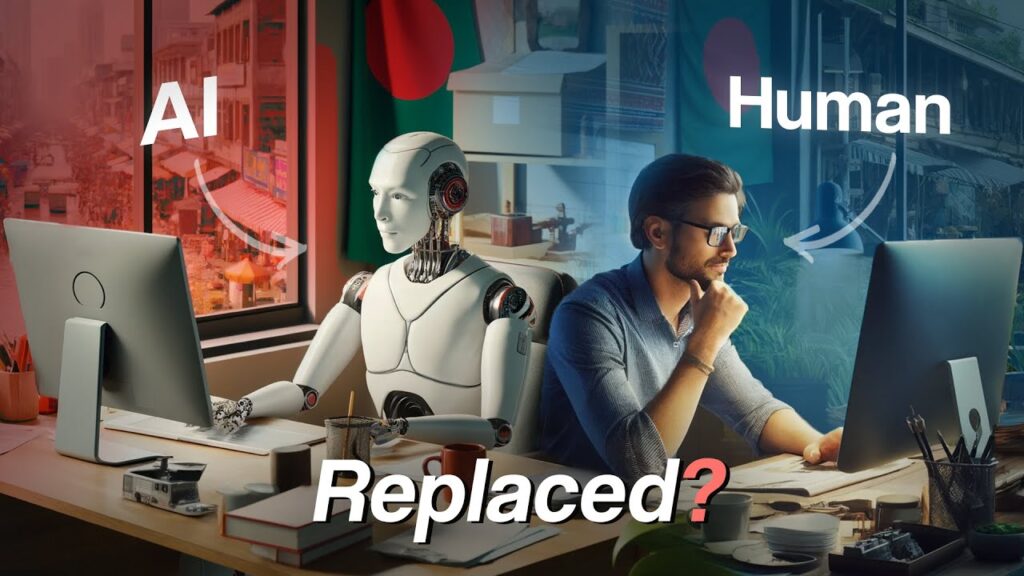
Artificial Intelligence (AI) is not a futuristic concept—it is transforming the global workforce at an unprecedented pace. From automating routine tasks to generating creative content, AI is reshaping industries, disrupting traditional career paths, and redefining the skills needed to succeed in the modern economy. Technologies such as natural language processing, machine learning, and robotics are not only enhancing productivity but are increasingly replacing tasks that humans once performed. As AI adoption accelerates, learning how it works is no longer optional—it has become essential. University-level classes on artificial intelligence play a critical role in preparing students to navigate a workforce undergoing rapid automation.
The Growing Impact of AI on Jobs
Recent reports from consulting firms and labor organizations show that AI will affect millions of jobs worldwide. Roles that involve repetitive, structured, or predictable tasks are most vulnerable to automation. For example:
- Customer service representatives are being replaced by AI chatbots and virtual assistants capable of handling inquiries 24/7.
- Data entry clerks and administrative assistants are being replaced by software that can automatically process and organize data.
- Retail cashiers face automation from self-checkout systems and AI-powered inventory management.
- Basic financial analysts are being replaced by AI systems that can quickly analyze market trends, forecast financial scenarios, and generate reports.
While these changes may sound alarming, they also create opportunities for individuals who understand AI. Students who learn how AI works can leverage it, rather than compete against it, opening doors to higher-value roles that require human judgment, creativity, and oversight.
Why University Education Matters
One of the key reasons to take AI classes at a university is the structured, in-depth knowledge they provide. University programs go beyond surface-level explanations and teach the foundational concepts that underpin AI, such as algorithms, neural networks, machine learning, and natural language processing. Students gain a clear understanding of how AI systems are built, how they process data, and how decisions are made.
Unlike online tutorials or self-study courses, university classes provide a comprehensive and guided curriculum, combining theory, hands-on labs, and real-world applications. Students learn to not only operate AI tools but also critically evaluate their limitations and ethical considerations. This foundation ensures that graduates are not merely users of AI technology—they become innovators, managers, and problem-solvers capable of designing systems, analyzing outcomes, and creating value in industries across the board.
Adapting to a Changing Job Market
The modern workplace is evolving. Even jobs that are not fully automated are increasingly requiring AI literacy. Business analysts, healthcare professionals, educators, marketers, and lawyers are all seeing AI tools integrated into their workflows. For instance:
- Healthcare professionals use AI for diagnostics, patient monitoring, and predicting disease outbreaks. Doctors who understand AI can interpret predictive models and integrate insights into patient care.
- Marketers use AI-powered analytics to understand customer behavior, personalize campaigns, and optimize engagement. Professionals familiar with AI can design strategies rather than rely solely on automated recommendations.
- Lawyers and compliance officers are using AI to review contracts, conduct legal research, and identify regulatory risks. Understanding AI helps them evaluate its outputs critically and maintain accountability.
By learning AI at the university level, students acquire the skills necessary to work alongside these systems, rather than being replaced by them. The ability to adapt to changing roles and technologies has become a key component of career resilience.
The New Jobs AI Is Creating
While AI is replacing certain jobs, it is also creating entirely new roles. Some of the emerging career opportunities include:
- AI and machine learning engineers who develop and optimize intelligent systems.
- Data analysts and data scientists who interpret large datasets to guide business decisions.
- AI ethicists and policy advisors who ensure AI systems are deployed responsibly and fairly.
- AI product managers who oversee the development of AI-powered solutions.
- Human-AI interaction designers who improve how people engage with intelligent systems.
Even students who do not intend to pursue a purely technical career can benefit. Business managers, healthcare administrators, educators, and creative professionals who understand AI are better positioned to innovate, optimize operations, and make informed decisions in an automated world. University classes give students a competitive advantage in securing these emerging roles.
Ethics, Bias, and Responsibility
As AI takes on more decision-making responsibilities, ethical considerations become paramount. AI systems can unintentionally amplify biases present in their training data, affecting hiring practices, loan approvals, and law enforcement decisions. University courses emphasize these critical issues, teaching students about fairness, transparency, accountability, and responsible AI deployment.
Learning AI in an academic setting allows students to explore case studies of AI gone wrong, analyze the consequences, and understand how to design systems that minimize harm. This awareness equips graduates to deploy AI ethically, balancing innovation with societal responsibility—a skill that will be increasingly valuable as AI adoption expands.
Critical Thinking and Problem-Solving Skills
University AI programs do more than teach technical skills—they strengthen critical thinking, creativity, and problem-solving abilities. Students learn to analyze real-world scenarios, evaluate whether AI solutions are appropriate, and design systems that balance efficiency with ethical considerations. Collaborative projects and research experiences encourage innovative thinking, enabling students to anticipate challenges and develop solutions in complex environments.
These skills are transferable across industries. Even if a student never becomes an AI engineer, the analytical and decision-making abilities cultivated in AI courses prepare them for leadership roles in an AI-driven economy.
Real-World Examples
Consider the following real-world examples:
- Amazon uses AI-driven logistics to optimize warehouse operations and delivery routes, replacing manual scheduling and inventory tasks. Employees who understand AI can work in operations analysis or logistics management rather than performing manual work.
- Healthcare AI tools like IBM Watson analyze medical records to provide treatment recommendations. Doctors familiar with AI can interpret results, validate models, and improve patient outcomes.
- AI in finance predicts stock trends and assesses credit risk. Professionals who understand AI can make better investment decisions and detect anomalies that automated systems may miss.
These examples illustrate that understanding AI is not just an academic exercise—it has practical, real-world implications that directly affect career prospects.
Future-Proofing Your Career
Technology is advancing faster than ever, and AI will continue to shape how work is performed. Students who gain AI knowledge now are better equipped to adapt to new technologies, identify opportunities, and maintain relevance in the workforce. University classes provide not only technical knowledge but also a framework for lifelong learning, critical thinking, and ethical reasoning—skills that will remain valuable no matter how automation evolves.
Conclusion
In a world where AI is replacing traditional jobs and transforming industries, understanding artificial intelligence is no longer optional. University classes on AI empower students with technical skills, ethical awareness, critical thinking, and the ability to thrive in an AI-driven economy. By learning AI, students position themselves not just to survive automation, but to innovate, lead, and shape the future of work. The time to embrace AI education is now—those who do will have a significant advantage in an increasingly automated world.





Responses