
How Do We Provide Jobs to People Who Lose Their Jobs due to Artificial Intelligence?


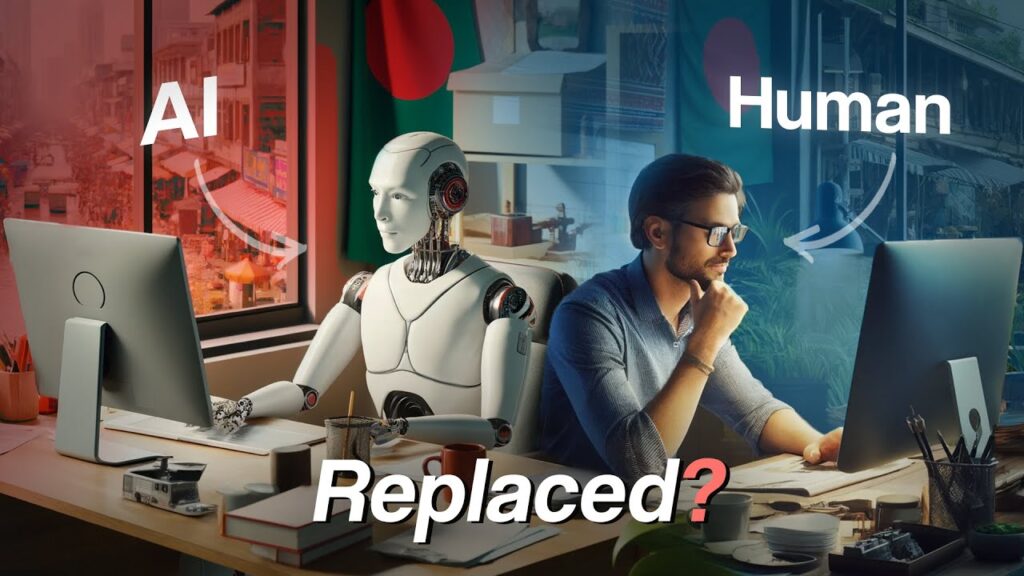
Artificial intelligence (AI) is no further a distant concept or a future possibility—it is a present reality reshaping the global workforce. From automated customer service systems and self-driving vehicles to AI-powered software that can write reports, analyze legal documents, diagnose diseases, and generate creative content, AI is transforming how work is done across nearly every industry. While these advancements promise efficiency, productivity, and economic growth, they also raise a critical and urgent question: how do we provide jobs to people who lose their jobs to artificial intelligence?
This challenge affects millions of workers worldwide and has deep implications for economic stability, social equity, and human dignity. Solving it requires more than short-term fixes; it demands a comprehensive rethinking of education, labor markets, business responsibility, and public policy. The future of work depends on how effectively society responds to AI-driven job displacement.
Understanding AI-Driven Job Loss
To address the problem, we must first understand it. AI does not simply eliminate jobs—it changes the nature of work. Historically, technological revolutions such as the Industrial Revolution and the rise of computers displaced some roles while creating others. However, AI differs in scale and speed. Unlike previous technologies that primarily replaced manual labor, AI can automate both physical and cognitive tasks. White-collar roles once considered safe—accounting, journalism, customer support, legal research, and even software development—are now vulnerable.
This rapid transformation creates a significant skills gap. Many workers lose jobs faster than they can retrain, and new roles often require technical or interdisciplinary skills that displaced workers do not yet possess. Without intervention, this gap can lead to long-term unemployment, underemployment, and widening economic inequality.
The Importance of Large-Scale Reskilling and Upskilling
One of the most effective solutions to AI-driven job displacement is reskilling and upskilling. Providing jobs to displaced workers requires equipping them with the skills needed for emerging roles. This must happen at scale and with urgency.
Governments, educational institutions, and employers must collaborate to create accessible training programs that focus on practical, in-demand skills. These programs should be affordable, flexible, and designed for adults who may already have family and financial responsibilities.
High-growth areas include:
- Artificial intelligence and machine learning support roles
- Data analysis, data labeling, and data governance
- Cybersecurity and cloud computing
- Healthcare and elder care
- Renewable energy and environmental sustainability
- Skilled trades and advanced manufacturing
Short-term certificate programs, online learning platforms, community college courses, and employer-sponsored training can all play a role. Unlike traditional four-year degrees, these pathways allow displaced workers to re-enter the workforce more quickly.
Creating Jobs That Complement AI
Another critical strategy is to design jobs that work alongside AI rather than compete with it. While AI excels at processing large amounts of data and performing repetitive tasks, it still lacks human qualities such as empathy, ethical judgment, creativity, and contextual understanding.
Many new roles emerge from the need to manage, supervise, and interpret AI systems. These include:
- Human-in-the-loop reviewers who oversee AI decisions
- AI trainers who teach systems using real-world data
- Ethics and compliance officers ensuring responsible AI use
- Product managers and designers who align AI tools with human needs
By restructuring workplaces to emphasize human strengths, businesses can maintain employment while benefiting from AI-driven efficiency.
Expanding Public Sector and Infrastructure Employment
Governments have a powerful role to play in job creation during periods of technological disruption. Large-scale investment in public infrastructure and services can absorb displaced workers while delivering long-term benefits to society.
Infrastructure projects such as transportation upgrades, renewable energy systems, climate resilience initiatives, and broadband expansion create jobs that are difficult to automate. Similarly, expanding public services in healthcare, education, social work, and community development provides meaningful employment while addressing critical social needs.
Public sector job creation can act as a stabilizing force, especially in regions heavily impacted by automation.
Supporting Entrepreneurship and Small Business Growth
AI disruption does not only eliminate jobs—it also lowers barriers to entrepreneurship. With access to AI-powered tools, individuals can start businesses with fewer resources than ever before. From online retail and digital marketing to consulting and creative services, AI enables small teams or solo entrepreneurs to compete in larger markets.
To encourage this transition, governments and financial institutions can offer:
- Microloans and grants for displaced workers
- Tax incentives for small business creation
- Free or low-cost business training and mentorship
- Access to shared workspaces and digital infrastructure
Helping displaced workers become entrepreneurs allows them to create their own jobs—and potentially create jobs for others.
Strengthening the Social Safety Net During Transitions
Providing jobs is not only about creating opportunities; it is also about supporting people during transitions. Many displaced workers face barriers such as financial insecurity, healthcare concerns, lack of childcare, and age discrimination.
A stronger social safety net can make retraining and job transitions feasible. Policies that support workers include:
- Extended unemployment benefits tied to retraining participation
- Wage subsidies for workers entering new industries
- Portable healthcare and retirement benefits
- Affordable childcare and transportation assistance
When workers feel secure, they are more willing and able to invest in learning new skills.
Rethinking Education for a Lifelong Learning Economy
The traditional model of education—study early in life, then work for decades—no longer fits an AI-driven economy. Providing jobs in the age of AI requires embracing lifelong learning.
Educational systems must evolve to support continuous skill development throughout a person’s career. Universities, community colleges, and employers should offer modular learning opportunities that allow workers to update their skills as technology changes.
This shift also requires teaching foundational skills that remain valuable regardless of technological change, such as critical thinking, communication, adaptability, and problem-solving.
Encouraging Corporate Responsibility
Businesses that benefit from AI have a responsibility to support the workers affected by its adoption. Ethical AI deployment should include workforce transition planning, not just cost-cutting.
Responsible corporate practices may include:
- Retraining employees rather than laying them off
- Sharing productivity gains through higher wages or reduced work hours
- Funding workforce development programs
- Partnering with educational institutions to align training with job needs
When companies invest in people, they build loyalty, improve reputation, and contribute to long-term economic stability.
Exploring New Work and Income Models
Despite best efforts, traditional employment may not immediately absorb all displaced workers. This reality has sparked discussions about alternative models such as shorter workweeks, job-sharing, and universal basic income (UBI).
While these ideas remain debated, they highlight the need to rethink how society values work and economic contribution. Reduced work hours, for example, can spread available jobs across more people while improving work-life balance. Income support mechanisms can provide stability while workers retrain or pursue new opportunities.
The goal is not to eliminate work, but to ensure that everyone can live with dignity in a rapidly changing economy.
Addressing Inequality and Regional Disparities
AI-driven job loss does not affect everyone equally. Certain industries, regions, and demographic groups face higher risks of displacement. Manufacturing towns, rural communities, and low-income workers often bear the brunt of automation.
Targeted policies are needed to address these disparities. Investments in regional development, remote work infrastructure, and localized training programs can help communities adapt rather than decline. Equity must be central to any solution, ensuring that technological progress benefits all segments of society.
A Shared Responsibility for the Future of Work
Providing jobs to people who lose their jobs to artificial intelligence is one of the defining challenges of our time. It cannot be solved by market forces alone or by placing the burden entirely on workers. Governments, businesses, educators, and communities must work together to shape a future where technology serves humanity rather than replaces it.
AI has the potential to generate enormous wealth, innovation, and productivity. Whether that potential leads to widespread prosperity or deep inequality depends on the choices we make today. By investing in people, embracing lifelong learning, and prioritizing inclusive growth, society can ensure that the rise of artificial intelligence leads not to mass unemployment, but to a more resilient, adaptable, and humane economy.
The future of work is being written now. With thoughtful action and collective responsibility, we can ensure that no one is left behind.




Responses